


 2026-10-28
 Technical Paper
 Click Count:22
Below article is quoted from JAPAN HOYA wechat account https://mp.weixin.qq.com/s/Qjldu3dHTCMVc6FBgEQEqA
How to analyze the photochromic lens performance metrics within 3 minutes?
Have you noticed that this summer feels exceptionally hot? Temperatures have exceeded 40 °C in many regions across China. High temperatures come with intense sunlight and strong intensity ultraviolet rays outdoors, making UV protection essential for outdoor activities. Among body tissues, the eyes are particularly vulnerable to UV damage and deserve key protection. Sunglasses and photochromic lenses serve as excellent “tools” for eye UV shielding.
This article focuses on the color changing performance of photochromic lenses and provides reference data, so you can recommend suitable photochromic lenses according to wearers’ outdoor visual scenarios.
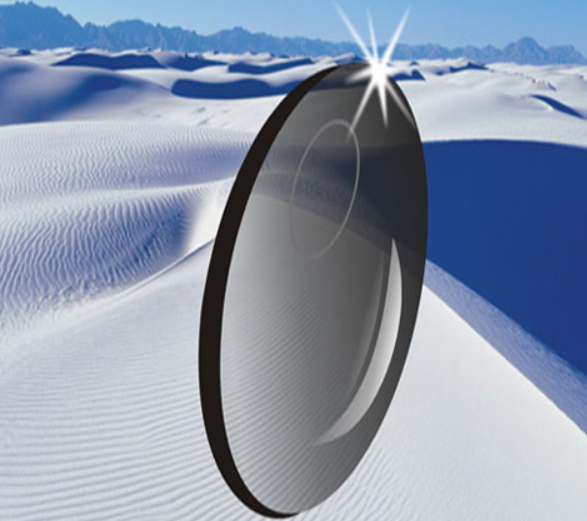
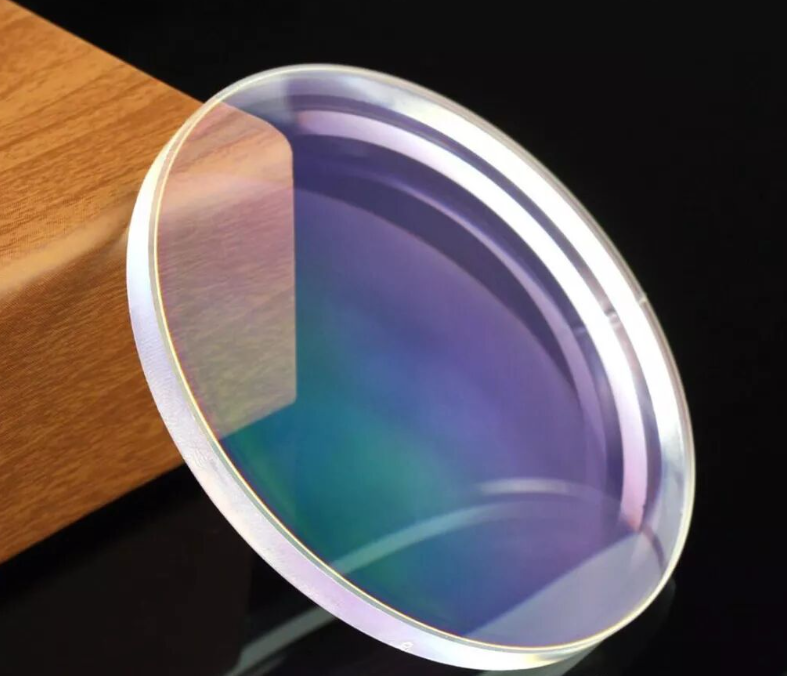
As functional eyewear for light management, photochromic lenses automatically adjust their tint depth in response to ultraviolet intensity. They can correct refractive errors while protecting eyes against ultraviolet radiation, making them the top choice for people with refractive errors who cannot simply wear regular sunglasses.
Photochromic Lens Test
We have measured the performance parameters of these four popluar HOYA photochromic lenses with precision instruments TPC-50 , and the results are shared below:
Test Conditions (in accordance with GB/T 9105 2023 Clause 5.3 Transmittance Performance)
· Test temperature: 23 °C
· Irradiance: 50 000±5 000 lux
· Darken state test duration: 15 min
· Faded state test duration: 15 min
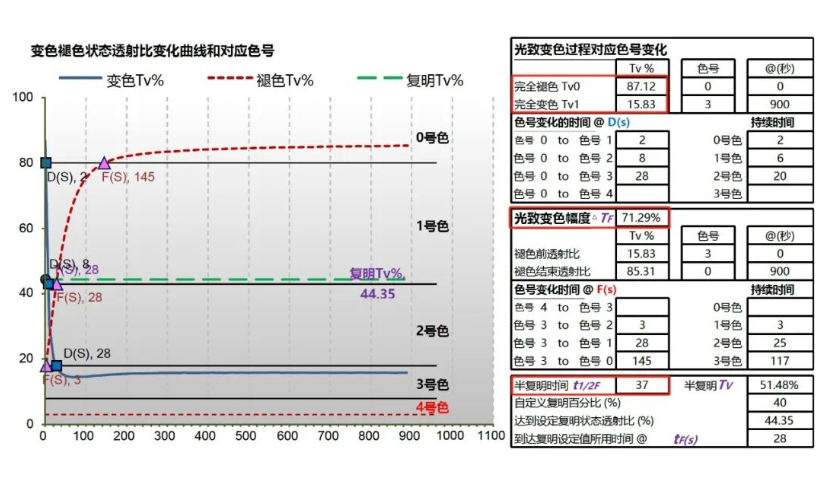
For Photochromic X:
· Light transmittance in faded state Tv₀ = 87.12 %
· Light transmittance in darkened state Tv₁ = 15.83 %
· Darkening amplitude ΔTd/ΔTf = Tv₀−Tv₁ = 71.29 %
· Half fading time t½F = 37 s
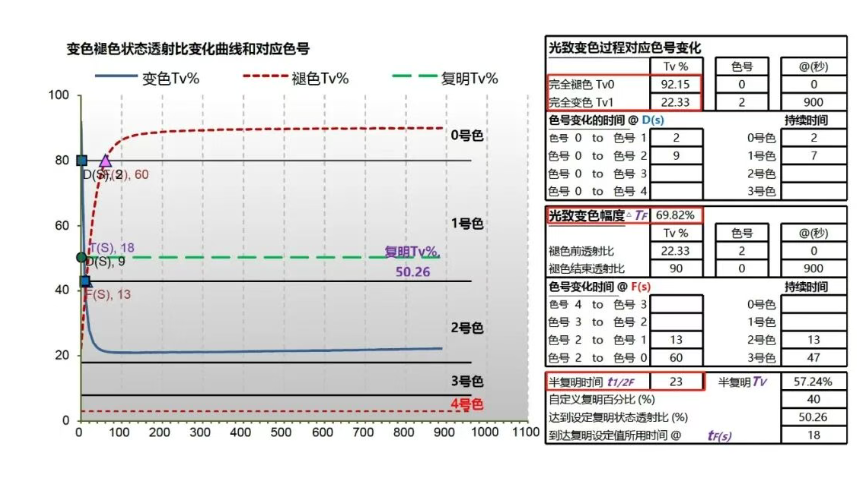
For Photochromic X Fast:
· Light transmittance in faded state Tv₀ = 92.15 %
· Light transmittance in darkened state Tv₁ = 22.33 %
· Darkening amplitude ΔTd/ΔTf = Tv₀−Tv₁ = 69.82 %
· Half fading time t½F = 23 s
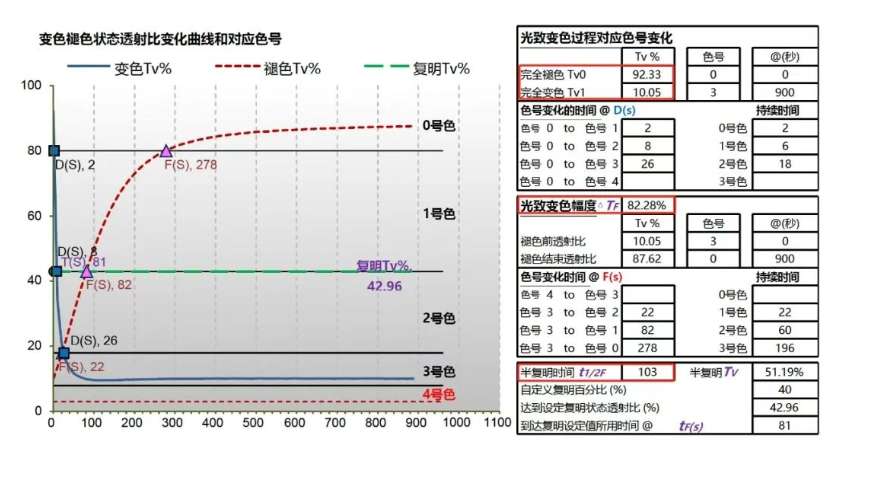
For Photochromic X Shield:
· Light transmittance in faded state Tv₀ = 92.33 %
· Light transmittance in darkened state Tv₁ = 10.05 %
· Darkening amplitude ΔTd/ΔTf = Tv₀−Tv₁ = 82.28 %
· Half fading time t½F = 103 s
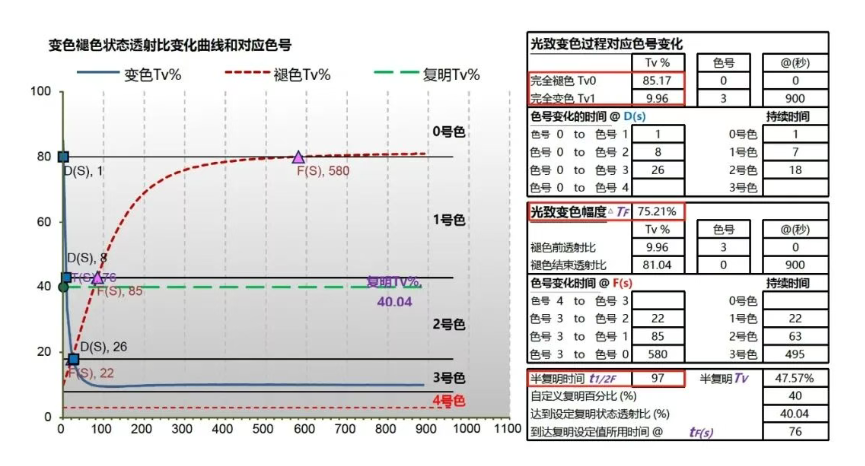
For Photochromic X Glare:
· Light transmittance in faded state Tv₀ = 85.17 %
· Light transmittance in darkened state Tv₁ = 9.96 %
· Darkening amplitude ΔTd/ΔTf = Tv₀−Tv₁ = 75.21 %
· Half fading time t½F = 97 s
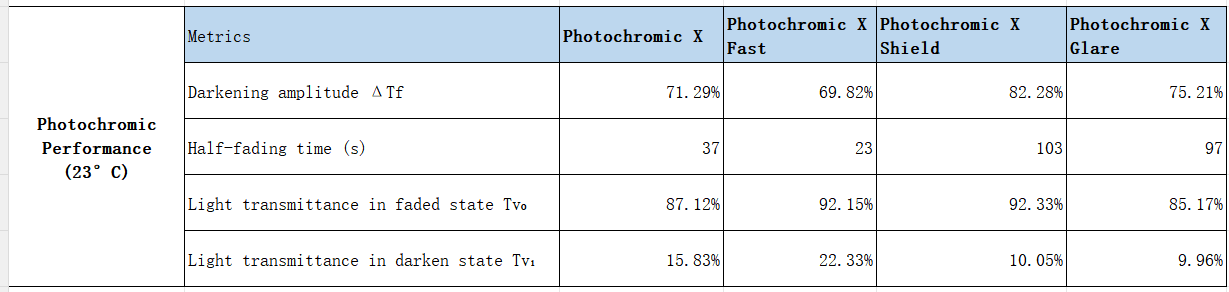
The test results above are compiled into following table for easy reference.
Summary in Testing
The table data supports you in recommending lenses for customers based on individual requirements and usage scenarios. For instance, for customers frequently moving between indoor and outdoor environments, Photochromic X Fast is recommended. Its fast darkeningand fading performance reduces discomfort caused by frequent environment transitions. For customers who drive or spend long hours outdoors and require robust UV resistance, Photochromic X Shield is preferred, featuring deeper darkening and higher grade UV protection.
Relvant Testing Devices
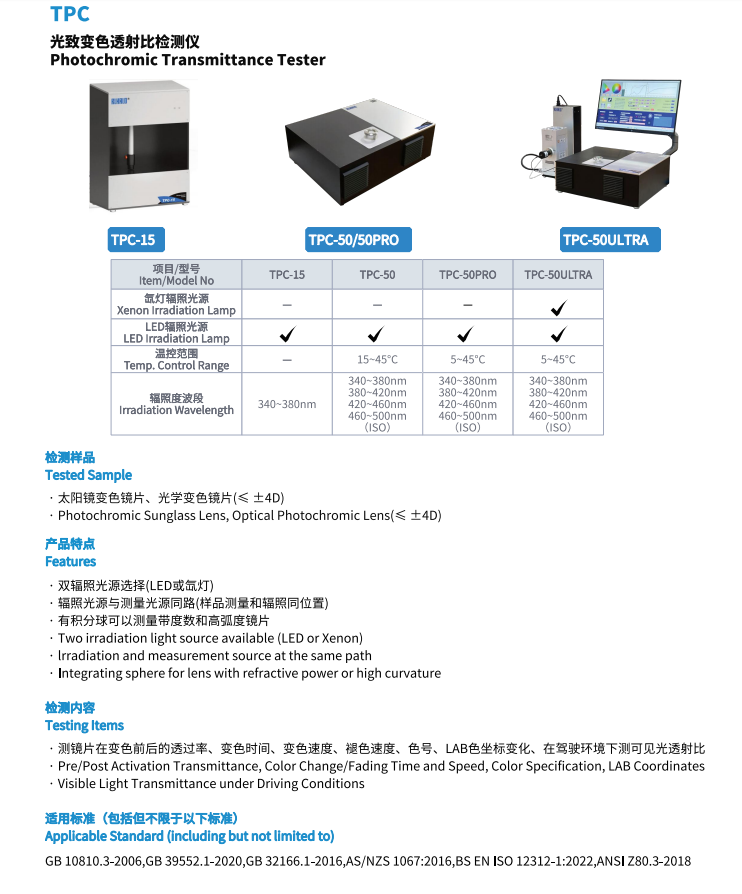
Photochromic lens tester are designed to evaluate core optical parameter including photochromic speed and durability.
The TPC-50 Photochromic Lens Tester is highly recommended for the following advantages:
user-friendly operation, coaxial irradiation and measurement light paths, and an integrating sphere that supports testing of optical lens with refractive diopter.
End